

IMF’s recent engagements on infrastructure governance
| Peer learning establishing a Public Investment Management (PIM) unit from Uganda | January 2018 |
| Public Investment Management Assessment (PIMA) | January 2018 |
| Training and suggestions for developing the full structure of the unit; Support in the development of the PIM Public Financial Management regulations; advice on PIM IT systems | February 2019 |
| Practical tools to strengthen appraisal (prescreen) and baseline calculations; incorporating these tools in budget process | July 2019 |
| Climate PIMA (C-PIMA) | May 2023 |
| Managing Fiscal Risks from PPPs | March 2025 |
Summary of C-PIMA report
(Published in February 2024)
Climate change has already started to impact Kenya's economy, and its potential macroeconomic and fiscal implications are significant. Rising annual mean temperatures and changes in precipitation patterns will likely lead to increased risks and intensities of extreme weather events such as heavy rainfalls, floods, and droughts. The country has already witnessed damages and disruptions to its infrastructure due to droughts and floods, resulting in substantial social and economic costs. Climate events account for a significant proportion of natural disasters in Kenya, and the damage caused by these events underscores the urgency of investing in resilient infrastructure across sectors such as energy, water resources, agriculture, and tourism.
⚠ Some users may experience reduced functionality using Internet Explorer. For the optimal experience, use Chrome or another alternative browser.
- Chart View: Institutional Design
- Chart View: Comparison with Peers
- Learn how to interpret the flower chart
INSTITUTIONS
C1 (Dimensions C1a-C1c) C2 (Dimensions C2a-C2c) C3 (Dimensions C3a-C3c) C4 (Dimensions C4a-C4c) C5 (Dimensions C5a-C5c)
Loading...
DIMENSION
C1a. National and Sectoral Planning
SUMMARY ASSESSMENT
Institutional Design: ---
DIMENSION SCORE
Loading...
DIMENSION SCORES
C1a.a.
Loading...
C1a.b.
Loading...
C1a.c.
Loading...
DIMENSION
C1b. Land Use and Building Regulations
SUMMARY ASSESSMENT
Institutional Design: ---
DIMENSION SCORE
Loading...
DIMENSION SCORES
C1b.a.
Loading...
C1b.b.
Loading...
C1b.c.
Loading...
DIMENSION
C1c. Centralized Guidance on Planning
SUMMARY ASSESSMENT
Institutional Design: ---
DIMENSION SCORE
Loading...
DIMENSION SCORES
C1c.a.
Loading...
C1c.b.
Loading...
C1c.c.
Loading...
DIMENSION
C2a. Coordination Across Central Government
SUMMARY ASSESSMENT
Institutional Design: ---
DIMENSION SCORE
Loading...
DIMENSION SCORES
C2a.a.
Loading...
C2a.b.
Loading...
C2a.c.
Loading...
DIMENSION
C2b. Coordination with Subnational Governments
SUMMARY ASSESSMENT
Institutional Design: ---
DIMENSION SCORE
Loading...
DIMENSION SCORES
C2b.a.
Loading...
C2b.b.
Loading...
C2b.c.
Loading...
DIMENSION
C2c. Oversight Framework for Public Corporations
SUMMARY ASSESSMENT
Institutional Design: ---
DIMENSION SCORE
Loading...
DIMENSION SCORES
C2c.a.
Loading...
C2c.b.
Loading...
C2c.c.
Loading...
DIMENSION
C3a. Climate Analysis in Project Appraisal
SUMMARY ASSESSMENT
Institutional Design: ---
DIMENSION SCORE
Loading...
DIMENSION SCORES
C3a.a.
Loading...
C3a.b.
Loading...
C3a.c.
Loading...
DIMENSION
C3b. PPP Framework Including Climate Risks
SUMMARY ASSESSMENT
Institutional Design: ---
DIMENSION SCORE
Loading...
DIMENSION SCORES
C3b.a.
Loading...
C3b.b.
Loading...
C3b.c.
Loading...
DIMENSION
C3c. Climate Consideration in Project Selection
SUMMARY ASSESSMENT
Institutional Design: ---
DIMENSION SCORE
Loading...
DIMENSION SCORES
C3c.a.
Loading...
C3c.b.
Loading...
C3c.c.
Loading...
DIMENSION
C4a. Climate Budget Tagging
SUMMARY ASSESSMENT
Institutional Design: ---
DIMENSION SCORE
Loading...
DIMENSION SCORES
C4a.a.
Loading...
C4a.b.
Loading...
C4a.c.
Loading...
DIMENSION
C4b. Ex Post Review of Projects
SUMMARY ASSESSMENT
Institutional Design: ---
DIMENSION SCORE
Loading...
DIMENSION SCORES
C4b.a.
Loading...
C4b.b.
Loading...
C4b.c.
Loading...
DIMENSION
C4c. Asset Management Including Climate Risks
SUMMARY ASSESSMENT
Institutional Design: ---
DIMENSION SCORE
Loading...
DIMENSION SCORES
C4c.a.
Loading...
C4c.b.
Loading...
C4c.c.
Loading...
DIMENSION
C5a. Disaster Risk Management Strategy
SUMMARY ASSESSMENT
Institutional Design: ---
DIMENSION SCORE
Loading...
DIMENSION SCORES
C5a.a.
Loading...
C5a.b.
Loading...
C5a.c.
Loading...
DIMENSION
C5b. Ex Ante Financing Mechanisms
SUMMARY ASSESSMENT
Institutional Design: ---
DIMENSION SCORE
Loading...
DIMENSION SCORES
C5b.a.
Loading...
C5b.b.
Loading...
C5b.c.
Loading...
DIMENSION
C5c. Fiscal Risk Analysis Including Climate Risks
SUMMARY ASSESSMENT
Institutional Design: ---
DIMENSION SCORE
Loading...
DIMENSION SCORES
C5c.a.
Loading...
C5c.b.
Loading...
C5c.c.
Loading...
C-PIMA SCORES
Income Groups
Regions
INSTITUTIONS
C1 (Dimensions C1a-C1c) C2 (Dimensions C2a-C2c) C3 (Dimensions C3a-C3c) C4 (Dimensions C4a-C4c) C5 (Dimensions C5a-C5c)
Loading...
Loading...
Loading...
Loading...
Sources: IMF Investment and Capital Stock Dataset, 2021; and IMF staff calculations based on PIMA reports. Note: The data displayed above might differ from the data in the PIMA report as the latter might incorporate additional information obtained during the PIMA mission.
DIMENSION
C1a. National and Sectoral Planning
SUMMARY ASSESSMENT
Institutional Design: ---
DIMENSION SCORE
Loading...
DIMENSION SCORES
C1a.a.
Loading...
C1a.b.
Loading...
C1a.c.
Loading...
DIMENSION
C1b. Land Use and Building Regulations
SUMMARY ASSESSMENT
Institutional Design: ---
DIMENSION SCORE
Loading...
DIMENSION SCORES
C1b.a.
Loading...
C1b.b.
Loading...
C1b.c.
Loading...
DIMENSION
C1c. Centralized Guidance on Planning
SUMMARY ASSESSMENT
Institutional Design: ---
DIMENSION SCORE
Loading...
DIMENSION SCORES
C1c.a.
Loading...
C1c.b.
Loading...
C1c.c.
Loading...
DIMENSION
C2a. Coordination Across Central Government
SUMMARY ASSESSMENT
Institutional Design: ---
DIMENSION SCORE
Loading...
DIMENSION SCORES
C2a.a.
Loading...
C2a.b.
Loading...
C2a.c.
Loading...
DIMENSION
C2b. Coordination with Subnational Governments
SUMMARY ASSESSMENT
Institutional Design: ---
DIMENSION SCORE
Loading...
DIMENSION SCORES
C2b.a.
Loading...
C2b.b.
Loading...
C2b.c.
Loading...
DIMENSION
C2c. Oversight Framework for Public Corporations
SUMMARY ASSESSMENT
Institutional Design: ---
DIMENSION SCORE
Loading...
DIMENSION SCORES
C2c.a.
Loading...
C2c.b.
Loading...
C2c.c.
Loading...
DIMENSION
C3a. Climate Analysis in Project Appraisal
SUMMARY ASSESSMENT
Institutional Design: ---
DIMENSION SCORE
Loading...
DIMENSION SCORES
C3a.a.
Loading...
C3a.b.
Loading...
C3a.c.
Loading...
DIMENSION
C3b. PPP Framework Including Climate Risks
SUMMARY ASSESSMENT
Institutional Design: ---
DIMENSION SCORE
Loading...
DIMENSION SCORES
C3b.a.
Loading...
C3b.b.
Loading...
C3b.c.
Loading...
DIMENSION
C3c. Climate Consideration in Project Selection
SUMMARY ASSESSMENT
Institutional Design: ---
DIMENSION SCORE
Loading...
DIMENSION SCORES
C3c.a.
Loading...
C3c.b.
Loading...
C3c.c.
Loading...
DIMENSION
C4a. Climate Budget Tagging
SUMMARY ASSESSMENT
Institutional Design: ---
DIMENSION SCORE
Loading...
DIMENSION SCORES
C4a.a.
Loading...
C4a.b.
Loading...
C4a.c.
Loading...
DIMENSION
C4b. Ex Post Review of Projects
SUMMARY ASSESSMENT
Institutional Design: ---
DIMENSION SCORE
Loading...
DIMENSION SCORES
C4b.a.
Loading...
C4b.b.
Loading...
C4b.c.
Loading...
DIMENSION
C4c. Asset Management Including Climate Risks
SUMMARY ASSESSMENT
Institutional Design: ---
DIMENSION SCORE
Loading...
DIMENSION SCORES
C4c.a.
Loading...
C4c.b.
Loading...
C4c.c.
Loading...
DIMENSION
C5a. Disaster Risk Management Strategy
SUMMARY ASSESSMENT
Institutional Design: ---
DIMENSION SCORE
Loading...
DIMENSION SCORES
C5a.a.
Loading...
C5a.b.
Loading...
C5a.c.
Loading...
DIMENSION
C5b. Ex Ante Financing Mechanisms
SUMMARY ASSESSMENT
Institutional Design: ---
DIMENSION SCORE
Loading...
DIMENSION SCORES
C5b.a.
Loading...
C5b.b.
Loading...
C5b.c.
Loading...
DIMENSION
C5c. Fiscal Risk Analysis Including Climate Risks
SUMMARY ASSESSMENT
Institutional Design: ---
DIMENSION SCORE
Loading...
DIMENSION SCORES
C5c.a.
Loading...
C5c.b.
Loading...
C5c.c.
Loading...
How To Read The Flower Chart
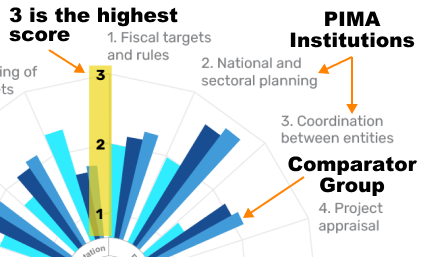 |
Scoring Each institution is analyzed along three dimensions that reflect the key features of the given institution, resulting in a total of 45 dimensions. Three possible scores are assigned to each dimension (1: not met, 2: partially met, 3: fully met) and their average within an institution produces a score for that institution. PIMA scores are summarized in a chart that allows comparison with its comparators. In the chart, the further the away from the center, the higher the PIMA scores.
|
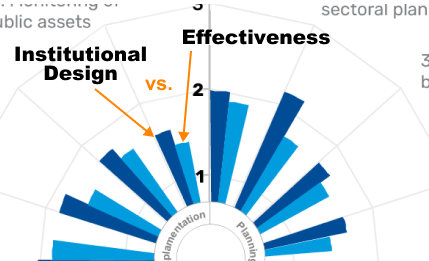 |
Institutional Design and Effectiveness Another key feature of the PIMA is that it assesses both institutional design (“what is on paper”) and effectiveness (“what is in practice”) of a given country, because there is often a gap between the design of formal rules and how they are implemented in practice, due to capacity constraints among others. |
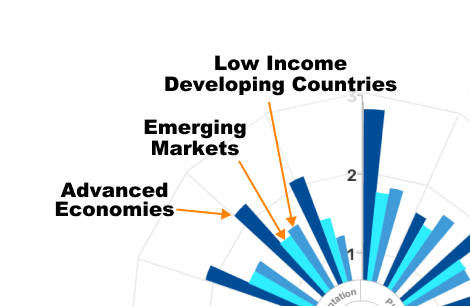 |
Scores by Income Level All countries, most notably emerging markets and low-income developing countries, have significant room to improve their infrastructure governance to increase effectiveness in public investment.
|
What Countries are in Each Income Group
The countries listed below cover only refer to those that have conducted PIMA.
Advanced economies (ADV) and low-income developing countries (LIDC) are classified according to latest World Economic Outlook. Emerging market (EME) include those not classified as advanced economies or low-income developing countries. Fragile states are classified based on IMF Policy Paper, Macroeconomic Developments and Prospects in Low-Income Developing Countries, 2018.
Advanced Economies (ADV)
Estonia Ireland Poland Slovak Republic United Kingdom |
Emerging Markets (EME)
Albania Angola Anguilla Argentina Armenia Belize Bosnia and Herzegovina Botswana Brazil Bulgaria |
Costa Rica Croatia Egypt El Salvador Eswatini Gabon Georgia Grenada Guyana Indonesia |
Jordan Kosovo Lebanon Malaysia Maldives Mauritius Mexico Montenegro Morocco North Macedonia |
Peru Philippines Romania Serbia Sri Lanka Thailand Timor-Leste Tunisia Ukraine |
Low-Income Developing Countries (LIDC)
Bangladesh Benin Burkina Faso Cambodia Cameroon Côte d'Ivoire Democratic Republic of Congo The Gambia Ghana |
Guinea Haiti Honduras Kenya Kiribati Kyrgyz Republic Liberia Madagascar Malawi |
Mali Mauritania Moldova Mongolia Mozambique Nepal Niger Nigeria Rwanda |
Senegal Sierra Leone Togo Uzbekistan Vietnam Zambia |
Fragile States (FS)
Côte d'Ivoire Democratic Republic of Congo Gambia Guinea Haiti Kiribati |
Kosovo Lebanon Liberia Madagascar Malawi Maldives |
Mali Sierra Leone Timor-Leste Togo |
